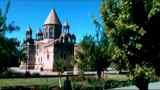
The Armenian Church, as a pan-national institution, and the Armenian clergy, as its ministers, played a significant role in the Armenian national liberation struggle that unfolded during the late 19th and early 20th centuries. The Church not only preserved the national and spiritual identity of the Armenian people but, in many instances, served as a vital hub for social cohesion; furthermore, individual members of the clergy participated directly in the struggle. The "Armenian Question" gained international significance and prominence, brought to the fore by Khrimyan Hayrik, who had been authorized by the Armenian Patriarch of Constantinople to represent the concerns and interests of the Armenians at the Congress of Berlin. Upon his return to the homeland, he urged his compatriots to cast aside the "paper ladles" of negotiation and instead adopt the path of the "iron ladle"—following the example of the Balkan peoples.