
Tour the border villages of Armenia with us. Get to know our countrymen's talk, words and deeds, worries and joys. Meet the people who keep our borders alive.
 |
Syunik- KhotThe border village of Khot, like neighboring Shinuhayr and Halidzor, was founded as a result of the relocation of an old settlement. Due to the lack of basic living conditions, the village was relocated in the 1960s by the decision of the Soviet leadership, and people left their ancestral homes. Due to its proximity to the road to Tatev, Khot is noticeably more lively than other border settlements. |
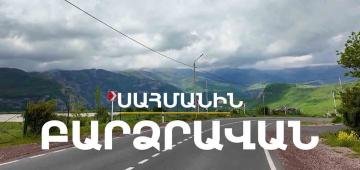 |
Syunik: Bardzravan
The village was named Bardzravan in 1940, before that it was known as Yeritsatumb or Yeritsatun and was included in the Zangezur province of Yelizavetpol. Due to being cut off from the Goris-Kapan road, it has many problems, despite this, it is in an advantageous position for agriculture. There is no shortage of arable land and pastures for livestock, unlike other villages in Syunik, part of whose gardens or pastures have passed to the enemy. Residents are concerned that the number of people living in the village has sharply decreased, there is no young workforce.
|
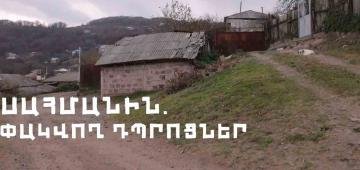 |
Schools to be closed on the border
One more will soon be added to the dozens of worries of those living in border and remote villages. According to the order of the Ministry of Education, Science and Higher Education, schools with a small number of students must be liquidated. According to this calculation, 229 schools have appeared on the list, of which 48 are in Syunik and 47 in Shirak. We have tried to summarize what serious problems specialists and community residents see in our video.
|
 |
Shirak: Aghin
The secondary school in the border village of Aghin will soon be closed by government decision. The village is one of the most depopulated communities in Armenia. It is located in the northwestern part of Armenia, on the Armenian-Turkish border. This settlement in Shirak province was founded in 1872 by Armenians who migrated from Kars and Mush.
|
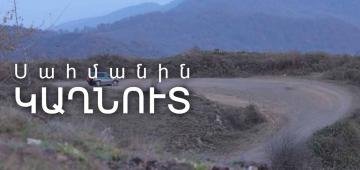 |
Syunik: KaghnutIn Kaghnut, many doors are closed, the village streets are empty. Only twelve of the 105 houses are inhabited. Life here has changed dramatically since the school closed in 1988. The road, which has not been repaired for decades, has isolated the village and multiplied the social and economic problems of the residents. |
 |
Syunik: YeritsvankThe early medieval Yeritsvank monastery is located on a plateau 3 km southeast of the village of Artsvanik in Kapan, isolated from other settlements. It was founded by the Metropolitan of Syunik, Yeritsak, in the 5th century. The Ministry of Culture, Sports and Tourism and the “Service for the Preservation of Historical and Cultural Reserves-Museums and the Historical Environment” SNCO are conducting excavations in the sanctuary, which has been neglected for centuries. The expedition is led by archaeologist Avetis Grigoryan. |
 |
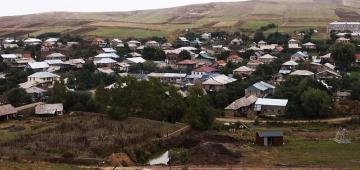
Syunik: YeghvardBefore the 44-day war, the road from Kapan, the center of Syunik region, to the village of Yeghvard was 12 km long. After the war, that road has almost doubled in length. Now Yeghvard is a border village, surrounded on three sides by Azerbaijani positions like a peninsula. The village, with a population of 250, guards about 17 km of the border. |
 |
VahanThe border village of Vahan is the northeastern gateway to Armenia. The village borders Azerbaijan for about 27 km. In some parts, the border is only 2-3 km away. The century-old village has had other names in the past. It was founded in 1925 under the name Rubenakert, renamed Ordzhonikidze during the Soviet era, and in 1991 received its current name in honor of the brave eagle of Artsvashen, Father Vahan. |
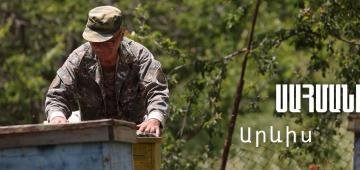 |
Arevis
The village of Arevis is located about 20 km from Sisian, but due to the poor road, it takes hours to reach the village.
Officially, Arevis has 41 residents, who live in the village intermittently, coming in the spring for agriculture and beekeeping. In the winter, barely ten residents remain in Arevis. Arevis is 4 km away from the enemy, but the reason the village has no residents is not at all its proximity to the border, but the lack of living conditions.
|
 |
The history and daily life of the border village of KhndzorutKhndzorut was founded by Armenians who migrated from the Khoy and Salmast regions of Persia as a result of the Russo-Persian War of 1826-1828. The residents of Khndzorut settled in the current area of the village later, starting in 1969. The history of Khndzorut is in the area called "Old Village", which is above the village. |
 |
JrapiOf the 311 km border between Armenia and Turkey, 72 km falls on Shirak province. Jrapi is one of 15 settlements in the province that has border status. The village was built in 1974. As a result of the construction of the Akhuryan reservoir, the villages of Nerkin and Verin Jrapi were merged and moved upstream. |
 |
BagaranThe Armenian-Turkish villages are so close to each other that the Bagaran residents are forced to hear the mullah's voice several times a day. Although the border village of Bagaran has many worries and problems, houses are being built and new Armenian families are being formed. |