
 |
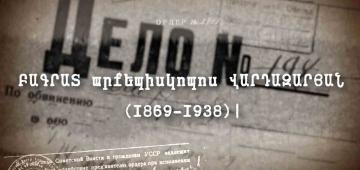
Archbishop Bagrat VardazaryanArchbishop Bagrat Vardazaryan, a Chancellor of the Mother See, a member of the Supreme Spiritual Council, and the Primate of the Baku-Shamakhin Diocese, was arrested in February 1938 in Echmiadzin. On the direct orders of the Soviet leaders, the Troika, the enthusiastic commissars were hunting down “spies” engaged in counter-revolutionary and nationalist agitation all over the country, with a hammer, sickle, and flag… Red Terror. History will record this later. But the investigator of the People’s Commissariat of Internal Affairs does not know about this. |
 |
Martyrs of the Regime, Part 2: Archimandrites of the Armenian Church
Fr. Tirayr Dallakyan, Assistant and scepter of Catholicos Khoren I. Accused of establishing contacts with suspicious persons and tourists and of conducting anti-Soviet conversations. Sentenced to be shot by the decision of the "Troika" on December 2, 1937. Acquitted on September 25, 1989.
Fr. Daniel Zadoyan, Archpriest of Akhtamar, comrade-in-arms of Aram Manukyan. Arrested by the Turkish authorities in 1894. After the Armenian Genocide in 1915, he moved to Ispahan, then to Soviet Armenia. Arrested in 1937 by the decision of the "Troika" and sentenced to be shot. Acquitted on September 25, 1989.
Fr. Hovhannes Hyusyan, Abbot of Geghardavank, representative of the Catholicos in the Middle East. Accused of counter-revolutionary agitation and sentenced to 10 years in prison on September 21, 1937. The verdict was overturned on September 21, 1940.
Rev. Yeghishe Shahumyan, Sentenced to 3 years in prison on October 7, 1931. Acquitted on June 30, 1989.
Rev. Yeznik Vardanyan, Rev. Yeremia Stepanyants, Rev. Suren Torosyan, Convicted on trumped-up charges and acquitted years later on the grounds of lack of evidence of a crime.
Blessed names in the Armenian Church calendar, their martyrdom is commemorated every year, at the Holy Liturgy, along with 148 repressed Armenian clergy.
|
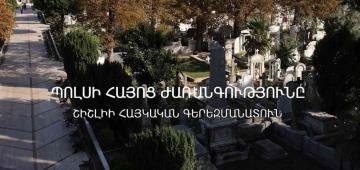 |
The Armenian Heritage of Constantinople: The Armenian Cemetery of ŞişliThe largest Armenian cemetery in Istanbul is Şişli, which was founded in 1865. The rules and layout of the cemetery were officially approved by the Patriarchal Decree. It covers an area of about 41,950 square meters. It is managed and maintained by the Armenian community of Turkey. The Şişli cemetery also houses the pantheon of Armenian patriarchs, intellectuals and artists of Constantinople. |
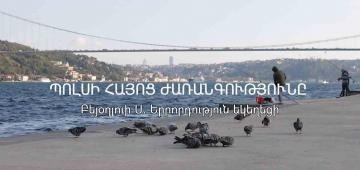 |
The Armenian Heritage of Constantinople: Beyoglu's Holy Trinity ChurchAbout 50,000 Armenians live in Istanbul. There are 33 Armenian churches. The largest in the Beyoglu district is the Holy Trinity, which was built in 1838. The architects are the famous Karapet Palyan, Hovhannes Serveryan, and master Minas. In the northern courtyard of the Holy Trinity Church is the tomb of the Catholicos of All Armenians Hakob Jughayetsi (1598-1680). |
 |
Nothing is new under the sun: part 4
In 1937, Bishop Artak Smbatyants was arrested in the Yerevan prelacy. The investigative bodies tried in every way to extract charges against the Catholicos from him. The investigators were interested in the ties of Catholicos Muradbekyan with foreign countries. It was necessary to label the head of the church as a state traitor and agent. The main targets were the Primate of the Atrpatakan Diocese, Archbishop Nerses Melik-Tangyan, and the famous intellectual Arshak Chopanyan. The Catholicos' ties with Chopanyan, who lived in Paris, were described as "irrefutable evidence of espionage." In 1937, Bishop Smbatyants was shot. In 1955, he was acquitted due to the lack of evidence of the crime.
Source: RA Ministry of Internal Affairs, National Archives and National Archives
|
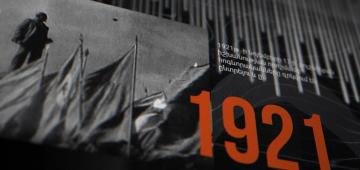 |
Nothing is new under the sun: part 3
By the decision of the Bolshevik government on November 17, 1921, the clergy were deprived of the right to vote and be elected, and the teaching of religious subjects in schools was prohibited. Article 6 of the constitution adopted on February 2, 1922, the church ceased to be a legal entity and had no right to acquire any property. This was followed by the seizure of movable and immovable property belonging to the church and their declaration as state property. In 1930, the monasteries of Sanahin and Sevan were dissolved. In 1933, the Geghard monastery was closed, and Ayrivan was also declared a closed archaeological site. As a result of persecution and repression, in 1938, only 7 clergy remained in the Mother See. Only the Mother Cathedral of St. Etchmiadzin was operational.
Source: RA Ministry of Internal Affairs, National Archives and National Archives
|
 |
Martyrs of the Regime, Part 3: Priests of the Armenian Church
In 1930-1936, 109 priests were repressed by the Bolshevik authorities. In total, 148 clergy were repressed in Soviet Armenia by 1938. 209 cases of violence were recorded against them, from imprisonment to torture and execution. The main accusations were anti-Soviet agitation, nationalism and counter-revolution. The false criminal cases and fabricated charges brought against the clergy were revealed years later. All the repressed were acquitted due to the lack of evidence of the crime.
Blessed names in the Armenian Church calendar, their martyrdom is commemorated every year, at the Holy Liturgy, along with 148 repressed Armenian clergy.
The Armenian Church has seen and experienced Bolshevism
|
 |
Nothing is new under the sun: part 2
Khoren I Muradbekyan: Catholicos of All Armenians was elected in 1932. From the day of the election, he was under the control of punitive bodies. During the investigation of the clergy, the task was to collect discrediting information about him and put pressure on the Catholicos. First, the Catholicos' brother, Levon Muradbekyan, was arrested and shot. The same fate befell his other brother, Sergey Muradbekyan, an employee of the Margara customs house. In 1938, Muradbekyan, Catholicos of All Armenians, also became a victim of terrorism organized by the authorities, being killed in the Veharan.
Source: RA Ministry of Internal Affairs, National Archives and National Archives
|
 |
Nothing is new under the sun: part 1
The Bolshevik authorities launched an active struggle against the church with the church opposition called the “Free Church Brotherhood”. They declared themselves church reformers: they demanded the abolition of the hierarchal order of the Armenian Church, the class of high-ranking spiritual authorities, the order of celibacy, the abdication of the Catholicos of All Armenians and the election of a new Catholicos, who would be “of the people”, finally, “return the church to the believers” and limit the Armenian Church to the borders of Soviet Armenia. The task set before them was, in particular, to collect false accusations against the monks of St. Etchmiadzin and to forge manuscripts. The St. Gregory the Illuminator Church in Yerevan was given to the “Free Church Brotherhood” by the decision of the City Council. This sect did not have a long life. Its leader, Bishop Ashot Shakhyan, in 1927, before his death, wrote a petition to Catholicos Gevorg V, where he confessed the wrongness of his step and asked to return his title. The defrocked bishop dies in solitude, abandoned even by his political patrons.
Source: RA Ministry of Internal Affairs, National Archives and National Archives
|
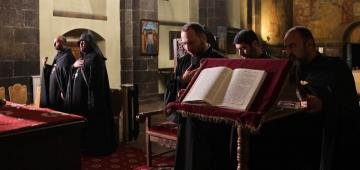 |
My worldIn 2010, 15 deacons received priestly ordination and anointing from the Primate of the Aragatsotn Diocese, Bishop Mkrtich Proshyan. Today, they serve in various dioceses in Armenia and the Diaspora. On the 15th anniversary of their ordination, the brothers from the diocese gathered and visited their spiritual father, the illegally imprisoned Archbishop Mkrtich. |
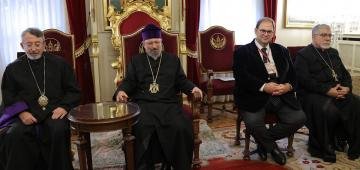 |
Translators' Day at the Armenian Patriarchate of ConstantinopleThis year, the week of the Feast of the Holy Translators was also marked by celebrations of the fifth anniversary of the enthronement of Patriarch Sahak Mashalyan at the Armenian Patriarchate of Constantinople. Among the festivities was the presentation of the documentary film “Path of Identity” about the history of the Armenian Patriarchate of Constantinople. |
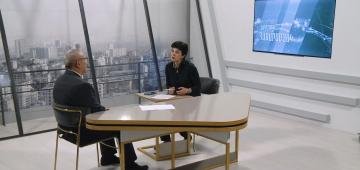 |
What does business have to do with the social climate?The economy and capital, in general, love minimal risks and maximum predictability. In these unpredictable and unstable times, where can capital escape? Anna Sargsyan spoke with Aharon Chilingaryan, a partner at BDO Armenia. |