 |
Hamo Sahyan: From Cliffs to the SkyHow to live in this age of great cultural shiftings, politicial ups and downs, publicistic-propaganda, poetry of the XX century and keep with ones own essense, and even if gone astray, to come back, again, to the direction once chosen? This is the main mystery of Sahyan-the poet. The film “Hamo Sahyan: From Cliffs to the Sky” presents the junctures of his creations and key periods of life of the poet. |
 |
Deliverance from the PitAdoption of Christianity is one of the biggest turning points in the Armenian history. The video presents the story of conversion of Armenians according to the “Armenian History” by Agatangelos and medieval manuscripts. This film with psychological and philosophical meanings reflects the dramatic relationshiops between key historical figures Tiridates the Great, Gregory the Illuminator, Virgon Hripsime. |
 |
Noncanonical gospels. Part 1Part one of the film series presents the story of origination of apocrypha, the principles and reasons for distinguishing between canonical and noncanonical books. |
 |
Noncanonical gospels. Part 3Third part presents the story of the Gospel of Judas found in Egypt in 1978, its content analysis and the discussions on the manuscript. |
 |
Noncanonical gospels. Part 4Fourth part of the series addresses one of the most famous figures of the human history – Judas. Who was Judas and why did this very same person betray the Saviour? What truths did he master? How can he be justified? Was Judas a betrayer or a victim? What literary and culturological interpretations did Judas’ character lead to? |
 |
Gospel of Haghpat: Markare Illustrator (Tsakhkogh)Haghpat-Ani-Getashen-Etchmiadzin and Yerevan: just like a number of well-known Armenian manuscripts, the Gospel of Haghpat has come a long and poignant road. Created in 13th century in Haghpat Monastery, later illustrated in Ani, in 1920-ies it appeared in Artsakh and from there was brought to Etchmiadzin by Bishop Garegin Hovsepyan. At present, the Gospel is displayed in Matenadaran after Mashtots and presents a unique Armenian manuscript art of Markare Illustrator (Tsakhkogh). |
 |
Modernism and the Avante-garde in ArmeniaArmenia was the first in Soviet Union to have a contemporary art museum. The museum was created with the efforts of individuals and due to the special atmosphere typical for 1960-ies. The works of Minas Avetisyan have significant role in the establishment of the museum and the art of Armenian modernism. The art of Minas has not lost its modernity and interestingness. How is Minas perceived abroad, what is the role of its work in the modern Armenian art, what’s the relationship between the national modernism and the avante-garde? Hayk Hambardzumyan discusses these issues with painter Narek Avetisyan. |
 |
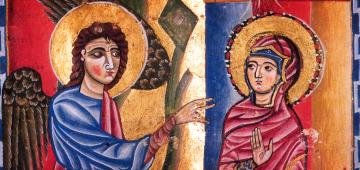
Witnesses of FaithThe film is about the history of Armenian Diocese in Russia and Nor Nakhijevan, Armenian-Russian historical and church relations, as well as about the construction of Diocesan Church Complex of Moscow. |
 |
Toros Taronatsi (of Taron)Plant and geometric decorations. Real and mystical images. Reflecions of folk art and folklore. The minitiarist Toros Taronatsi hears the voices of the outer world and tries to record them. National legends are of great interest to him and they rendered on the pages of the manuscript with fresh interpretations. |
 |
Toros RoslinNew look to the traditional topics, emphasized drama and psychological tenseness of images, expressiveness of feelings and a unique palette. These are the characteristic features of the art of Toros Roslin – the highest peak of Cilician school of miniature. |
 |
Sargis PitsakSargis Pitsak is one of the fundamental representatives of the Armenian book art. His mastery of artistic language is unsurpassable. Due to his images with the power of symbol the Bible and the ritual literature became closer and understandable to the reader, and the unlearned believer was able to communicate to the sacraments of the Scriptures merely for his pictures. |
 |
MomikMomik is one of the three famous representatives of Gladzor school of miniature. He was born in Vayots Dzor, most likely in the end of 60-ies of 13th century. He lived and created in Syunik. He spent his life in Vayots Dzor, and had children and grandchildren. The biography of Momik Vardpet has been interwoven with lovely legends. Miniature, cross-stone making, architecture: the gifted Vardpet made everything he touched beautiful and blossom; he gave spirit to the manucript and stone, enlivened and magnified the architectural structure passing it to the generations as a stone-made prayer. |